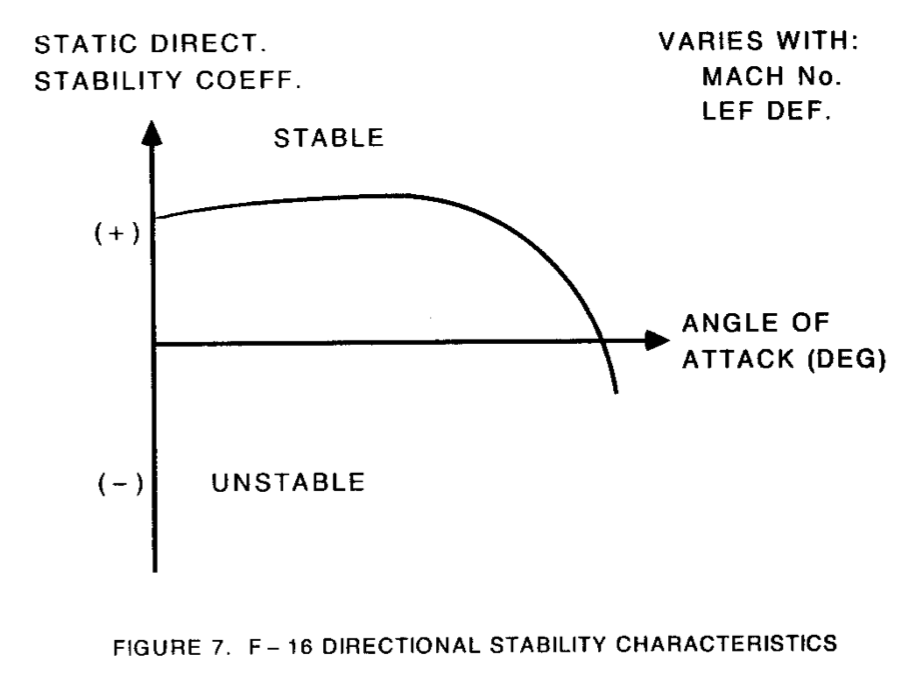
The F-16 was designed to favor transonic maneuvering at the expense of wave drag in supersonic flight.[^1] This used a wing with a low fineness ratio and sweep.[^1] It was also designed for relaxed static stability.[^1] The negative static margin caused by aerodynamics required a reliable control system.[^1] This relaxed static stability design increased sustainable lift from 4-8% in the subsonic range and 8-15% in the supersonic range.[^1] Enhancement features were introduced to prevent high AOA departures and spin resistance.[^1] At M0.8 @ 25deg AOA the F-16 had positive directional stability for sideslip angles from 0 to 10 degrees.[^1] The YF-16 was not able to drive the airplane into the unstable sideslip region as it only had a rudder power of 0.03 but enough stall resistance is built in through the usable AOA that it is easy for the FCS to limit the AOA.[^2] Having the engine intake below the nose avoided gun gas ingestion.[^3] The flap scheduling reduced profile drag at supersonic speeds, increased lift by 12% and reduced the buffet intensity by 60%.[^3] The relaxed static stability increased the L/D ratios at subsonic and supersonic speeds.[^3] It also reduced the down-load needed to trim the at high lift coefficients and supersonic speeds.[^3] The blended wing-body design allowed for more internal volume, reduced wetted area, and increased structural rigidity.[^3] It also used an area rule to decrease wave drag.[^3] A deep stall was possible when the AOA was above 60 deg.[^3] External stores caused an aggrevation of the roll-coupling tendencies.[^5]
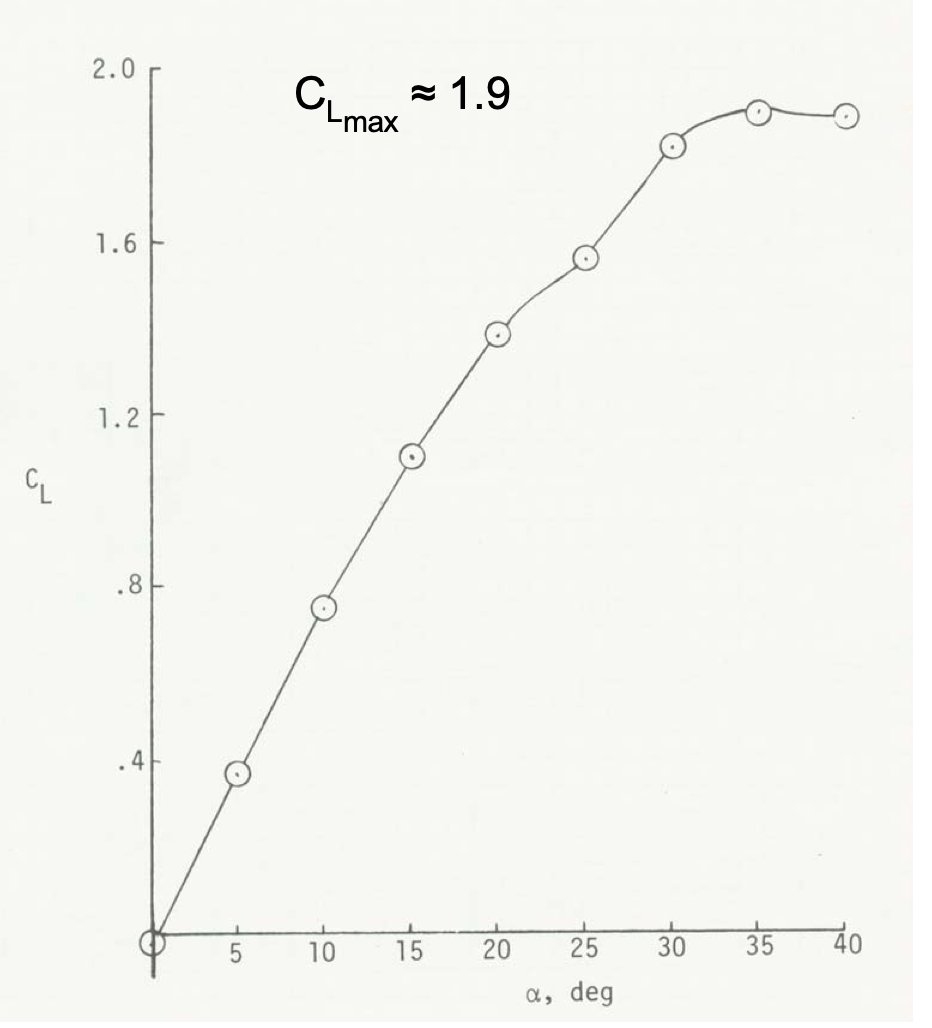
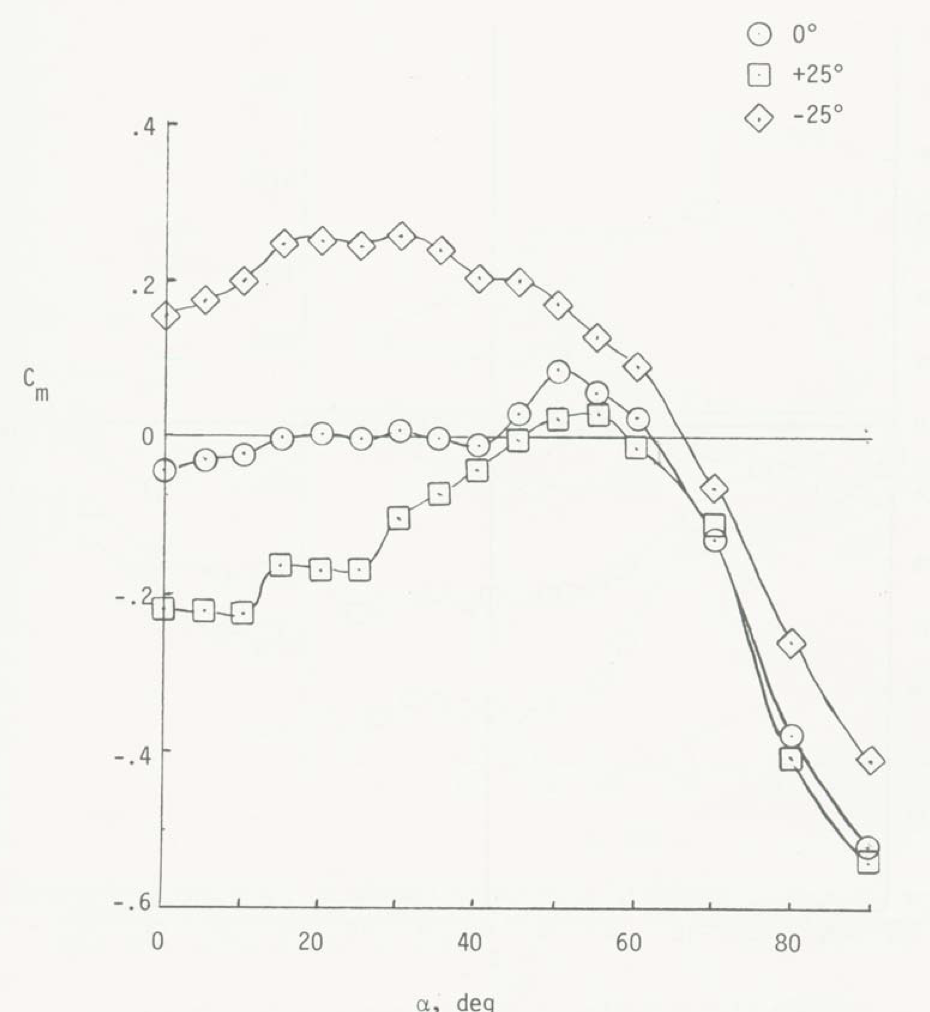
The F-16 used a NACA 64A204 airfoil.[^3] The pitching moment curves are shown below.
 [^3]
[^3]
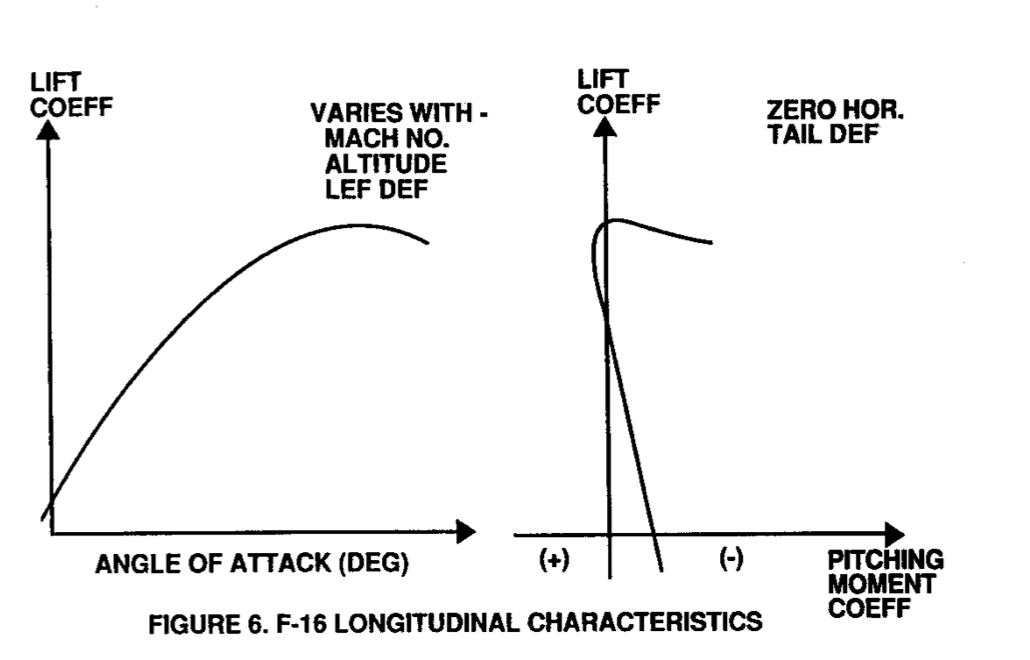
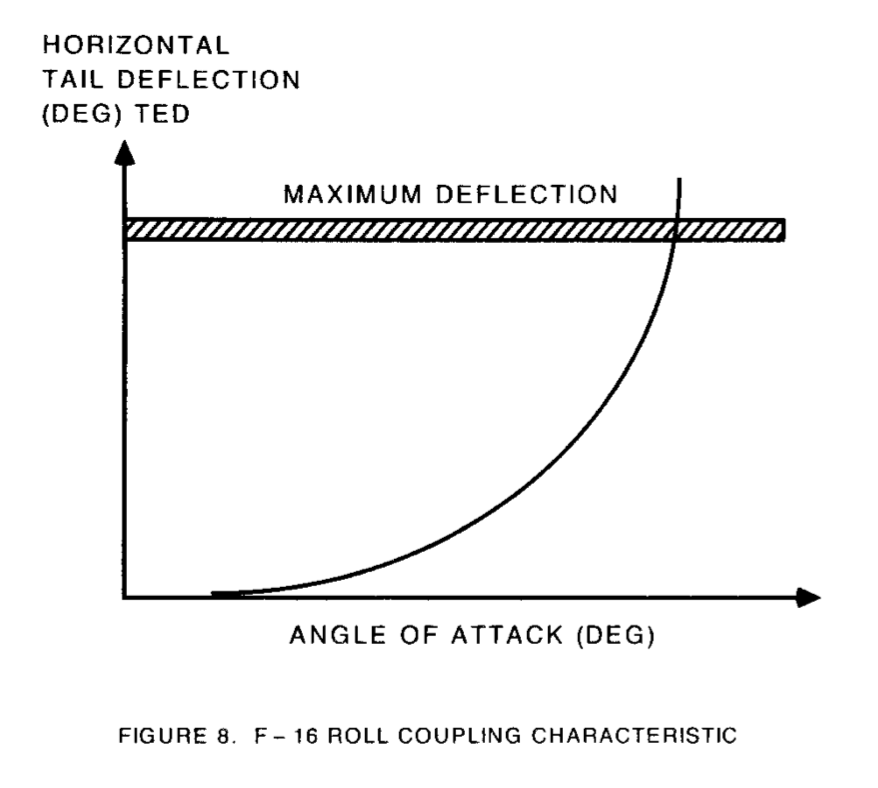
The f-16 with a basic control system was resistant to yaw departure.[^4] It was susceptible to pitch departures caused by inertial coupling due to rapid large amplitude rolls at low airspeeds.[^4] It also had a deep-stall trim condition that was difficult to recover from [^4] The airframe operates in moderate levels of negative static margin at low subsonic speeds.[^4] The maximum lift coefficient occurred at AOA.[^4] The static margin at low AOA is -4%.[^4] There is a loss in nose-down stabilator effectiveness at AOA greater than 25 degrees.[^4] For sideslip angles greater than 10 degrees there is a loss in stabilator effectiveness.[^4] The rudder effectiveness was high and didn’t degrade much over the AOA range.[^4] Roll control was good, with adverse yaw only becoming significant above AOA.[^4] During high roll rates at high AOA, there may not be sufficient nose-down restoring moments available from the stabilator to counter the inertial nose-up moments.[^5]
 [^5]
[^5]
 [^5]
[^5]
 [^5]
[^5]
Relaxed Static Stability
F-16 High AOA Enhancement Features
F-16 Flat Spin Modes - identified during wind-tunnel testing
F-16 Deep Stall Manual Override - encountered during flight testing
F-16 LEX
F-16 Leading Edge Flap - deflected -2 deg at supersonic speeds for decreased profile drag
F-16 Trailing Edge Flaperons - deflected -2 deg at supersonic speeds for decreased profile drag
YF-16 Drag Polar - shows drag polar for prototype
F-16 Vortex Lattice Analysis
F-16 Flap Scheduling
F-16 Pitch Limiter - prevents excursions to excessively high AOA
F-16 Block 15 - had a 30% increased vertical stabilizer
GeneralDynamicsCase
#andersonDEVELOPMENTACTIVEFLYBYWIRE[^2]
#entsmingerGeneralDynamicsF16[^3]
#SimulatorStudyStall[^4]
#koglerAutomaticLimitersAir1988[^5]